Chronic Vaginal Bacterial/Yeast
August, 2023
You can't out-prescribe a diet that feeds the infection
Every recurrent vaginal infection has two addresses. One is local, the vaginal microbiome. The other is your gut, your blood sugar, and what's on your plate. Conventional care treats the first and ignores the second, which is why the pills work for two weeks and then quit.
Naturopathic and functional medicine start from the opposite end. Clear the acute infection, yes. Then ask the real question: what in this body's terrain keeps rolling out the welcome mat?
Know which infection you're feeding
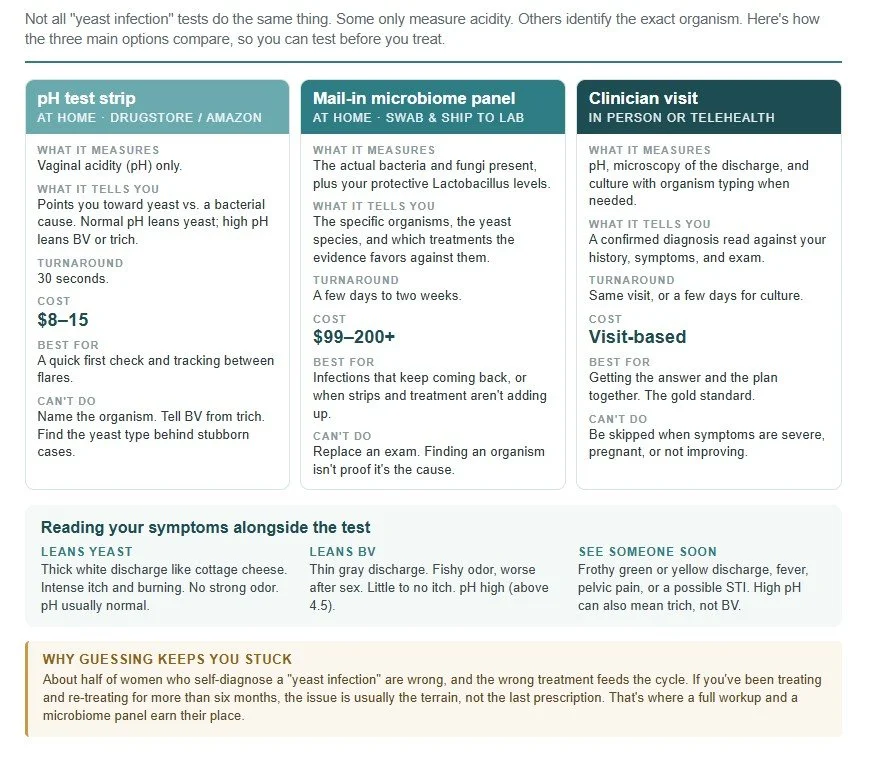
Bacterial vaginosis and candidiasis are opposite conditions, and food affects them differently. BV runs alkaline, thin gray discharge, fishy odor. Yeast runs acidic, thick white discharge, relentless itch. Before any treatment plan, confirm with vaginal pH and microscopy. Treating the wrong one wastes months, and the nutritional strategy shifts depending on the answer.
The blood sugar connection nobody mentions
Candida runs on glucose. When blood sugar spikes, so does the fungus. Women with insulin resistance, prediabetes, or a diet built on refined carbohydrates and sugar hand the yeast a steady food supply. You can take fluconazole every month and never get ahead of it, because you're refilling the tank between doses.
This is the first place a functional workup looks. Fasting glucose, fasting insulin, HbA1c, and often a HOMA-IR calculation. If insulin resistance is driving recurrent yeast, no antifungal will hold until the metabolic picture changes.
The dietary move: pull refined sugar and white flour. Lower the glycemic load. Eat protein and fat with every meal to flatten glucose curves. This isn't a candida-cleanse fad. It's cutting off the fuel line.
Feed the good bacteria, starve the bad
Your vaginal ecosystem depends on Lactobacillus, the bacteria that keep pH near 4 and crowd out invaders. That population is fed and seeded from the gut. A wrecked gut microbiome means a fragile vaginal one.
What helps rebuild it:
Fermented foods with live cultures. Plain unsweetened yogurt, kefir, sauerkraut, kimchi, miso. These deliver live Lactobacillus and the acids that favor it.
Prebiotic fiber. Onions, garlic, leeks, asparagus, cooked-and-cooled potatoes, oats, flax. Fiber feeds your resident bacteria so they can hold territory.
Polyphenol-rich plants. Berries, green tea, extra-virgin olive oil, dark leafy greens. These shape a microbiome that resists overgrowth.
Cut the ultra-processed foods, emulsifiers, and artificial sweeteners that thin the gut lining and disrupt the flora. Some sweeteners feed the wrong organisms directly.
The nutrients that do the quiet work
Deficiencies show up again and again in women with recurrent infections:
Vitamin D. Low levels track with more frequent BV and yeast. It regulates immune tolerance at mucosal surfaces. Test 25-OH vitamin D; most chronic cases sit below optimal.
Iron and ferritin. Both too-low and too-high disrupt the vaginal environment. Worth checking, not guessing.
Zinc and vitamin A. Both maintain mucosal integrity, the barrier that keeps organisms in their place.
Omega-3 fats. They calm the low-grade inflammation that follows women through flare after flare.
A functional plan tests these rather than assuming. You supplement to a target, then retest.
The botanicals and the biofilm
Here's why antibiotics alone fail against recurrent BV: Gardnerella builds a biofilm, a slime shield glued to the vaginal wall. Drugs kill the free bacteria and slide off the shield. The colony regrows.
The naturopathic toolkit goes after the biofilm and rebuilds the terrain:
Boric acid suppositories, 600 mg vaginal, never oral, never in pregnancy. Disrupts biofilm and handles resistant yeast species that fluconazole misses.
Berberine-containing herbs (goldenseal, Oregon grape) for antimicrobial and blood-sugar support at once, which is a useful two-for-one in insulin-resistant patients.
Garlic, oregano oil, and other botanical antimicrobials, chosen to the case, never shotgunned.
Targeted probiotics, specifically Lactobacillus crispatus and rhamnosus GR-1 / reuteri RC-14, taken orally and used vaginally after antibiotics to recolonize. Recolonizing is not optional. It's the step that decides whether this comes back.
A word of caution, because it matters: botanicals interact with medications. Berberine affects blood sugar and drug metabolism. Anyone on prescriptions needs an interaction check before starting. This is where a licensed practitioner earns their place.
The bottom line
Recurrent infection is a terrain problem wearing an infection costume. You cannot out-prescribe a diet that feeds the very organism you're trying to clear. Restore the blood sugar, feed the good bacteria, fix the deficiencies, clear the biofilm, and put the right Lactobacillus back where it belongs. Your body knows how to hold this ground. Give it the conditions and the workforce to do it.
If you've been on the treat-and-repeat cycle for more than six months, find a practitioner who will run the full workup and build the plan, not refill the same script.